SEO to GEO: Why AI Search Changes Everything About Your Website
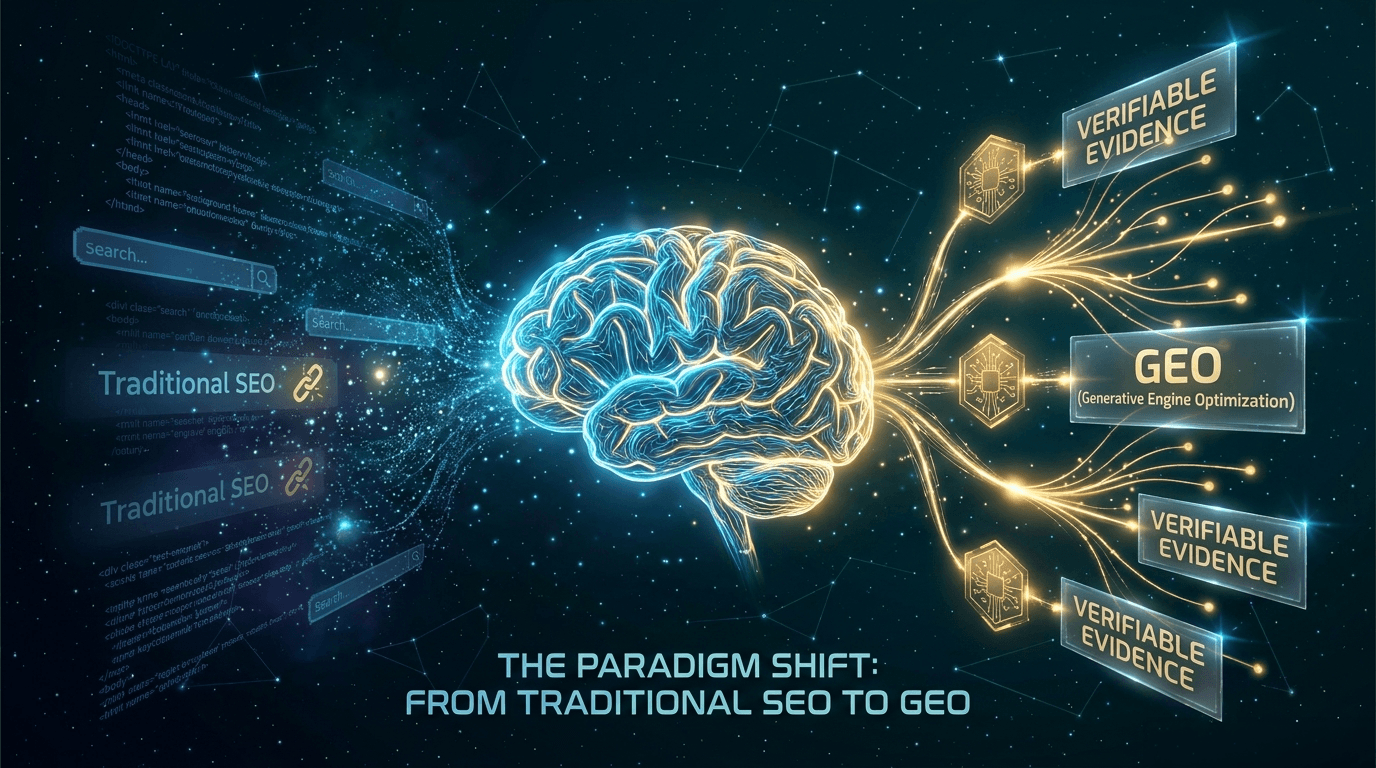
In the past, when people wanted to find information, they opened Google, typed a search, and clicked one of the blue links. That was the world of SEO (Search Engine Optimization): websites competing to rank higher so more people would see them.
But things have changed.
More and more people now use AI search — ChatGPT, Perplexity, Google AI Overview — where you simply ask a question and the AI assembles an answer for you, instead of handing you a list of ten links.
This shift has produced a new term: GEO (Generative Engine Optimization).
In plain words: SEO means "getting your website ranked higher in search results." GEO means "getting AI to cite your website when it answers questions."
It all comes down to one word: being cited.
In the old world, the goal of SEO was to reach page one. But AI search has no "page one" — the AI simply gives you an answer, with one or two source links attached below it.
So the goal has changed. Now the questions are:
- When someone asks ChatGPT "which IT company in Hong Kong is good?", will your company be mentioned in the answer?
- Is your website one of the sources AI knows and trusts?
That is the core of GEO: it is not about rankings, it is about earning citations.
How does AI decide which website to cite?
AI does not judge by feelings the way humans do. It prefers content that:
- States facts and numbers — "we completed 700 projects" beats "we are the best in the industry".
- Shows depth and real examples — teaching how to do something beats vague concepts.
- Is clearly structured and easy to read — AI struggles with messy, unstructured pages.
- Comes from a fast, stable website — AI crawlers dislike slow sites.
In other words: AI cites websites that are clear and substantive — not websites full of hype.
What is the difference between SEO and GEO?
- SEO targets Google’s algorithms; GEO targets AI models.
- SEO is about keyword density; GEO is about content AI can use directly.
- SEO competes for rankings; GEO competes for citations.
- You still need SEO in the AI era — but SEO alone is no longer enough.
Four steps you can take today
- Step 1: State clearly who you are and what you do. Keep your company description simple and direct — avoid piling up jargon.
- Step 2: Answer real questions. Think about what clients ask you, then write an article answering each question — and use the question itself as the title.
- Step 3: Add numbers and examples. When you started, how many projects you delivered, what metrics prove your work — AI loves concrete evidence.
- Step 4: Make your website fast and stable. Compressed images, smooth mobile experience — humans like it, and AI crawlers reward it too.
Summary
SEO is not dead, but it is no longer enough. In the future, the winners will not be the websites that rank highest — they will be the websites that AI cites most.
- From today, when you create content, stop asking "what position will this reach?" Instead ask: "will AI cite this?"
- Want to make sure AI search remembers your company? Contact FROMDB — we will help you get GEO right, step by step.